I don't want to be the strong one anymore: what that sentence is really saying
It is not a request for a bubble bath or a weekend away. It is a verdict on a structure you never agreed to hold up.
By Lesley Yeaman
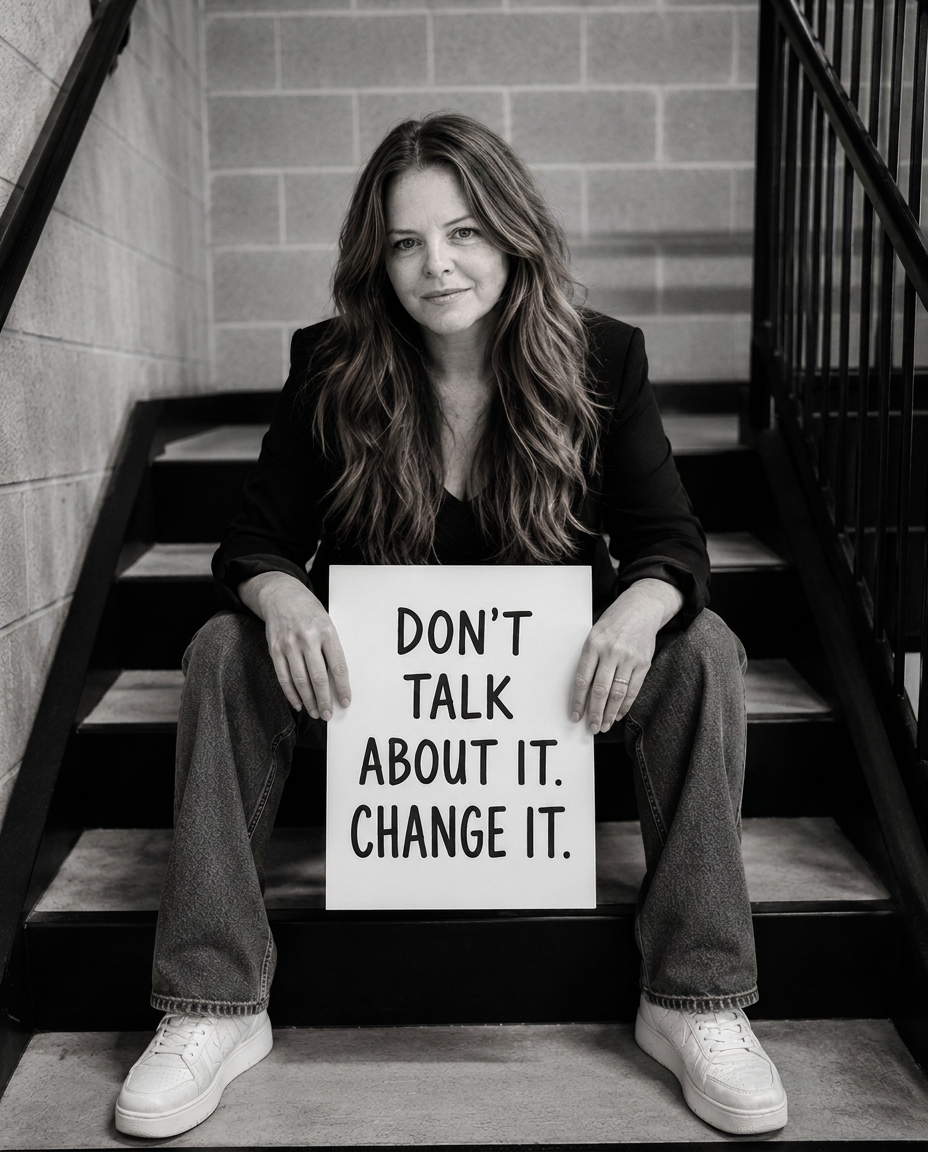
"I don't want to be the strong one anymore" is not a request for a bubble bath, a weekend away, or somebody to tell you how amazing you are.
It is what you say after years of keeping the room calm, carrying the decision, swallowing the reaction, and making sure everybody else gets through the day. It is what you say when strength stops operating as power and starts operating as a life sentence. The sentence is not an emotion. It is a verdict: the role of strong one has taken more than it has ever paid back.
You are not weak for being finished with it. You are reading the bill for the first time.
Always the strong one: a role, not a personality
People call you strong because it sounds generous. They say it when you stay functional in a crisis, take the difficult call, show up after disappointment, and refuse to make your pain everyone else's administrative problem.
Strength was never the issue. The issue is that everyone started treating your capacity as permanent infrastructure. Load-bearing walls don't get thanked. They get built on.
You became the one who doesn't need checking on. The one who will figure it out. The one who can absorb bad news without derailing the room. The one whose needs get filed under later, because you are "fine." Later has a way of never arriving.

You may have defended the role yourself. Being strong protected you from being dismissed. It protected you from having to ask. It gave you a place in your family, your workplace, your friendships, your relationship. If you were useful, composed, and prepared, people had fewer reasons to let you down.
They still did. They just did it in ways you could explain away.
- They brought you problems, not support.
- They praised your resilience instead of sharing the load.
- They assumed you would cope, because you always had.
- You learned to look capable enough that nobody ever asked the question you most needed asked.
Strength becomes a trap the moment it is the only version of you anyone is permitted to meet.
"I don't want to be the strong one anymore" is not a rejection of your power. It is a refusal to be assigned permanent emotional and practical leadership without your consent.
No one takes care of me: why the cracks went unnoticed
Some people didn't notice because they were absorbed in themselves. Some didn't notice because the system rewarded them for not noticing. And some didn't notice because you engineered the cost to be invisible.
You cried in private. You finished the task anyway. You said "all good" while privately working out how to survive another impossible week. You let people read your silence as capacity. You didn't want to be difficult, or needy, or the reason for a hard conversation.
Resentment built underneath the surface, because you were handing people a false reading and then blaming them for acting on it.
That's a hard sentence to sit with. It's also the load-bearing point where the structure starts to change.
The people around you may have failed you. You don't need to rewrite that history to change what happens next. But you also have to stop making it easy for them to keep drawing on the calmest, most available version of you while you wait for them to guess what it's costing.
Being understood without speaking is a beautiful hope. It is a catastrophic operating model.
What comes next requires language, not collapse, and not an accusation released years late. It requires language accurate enough to change the arrangement.
There is a second cost to staying unreadable: you lose the skill of receiving. When someone finally offers to take something on, you can't let them hold it. You correct how they do it, minimise what you actually need, or turn the conversation back to them because their attention makes you uncomfortable. Then you use the absence of support as further proof that you are alone.
That loop is not evidence that no one cares. It is evidence that the strong-one role is protecting itself. It keeps you in control by making sure no one gets close enough to see the real load. Breaking it means telling the truth before resentment becomes the only language you have left.
Self-containment is not strength
Self-containment has a good reputation. People call it dignity. In practice, it is a locked room.
- You contain the disappointment so no one else feels uncomfortable.
- You contain the anger so you stay reasonable.
- You contain the fear so everyone else has somewhere to lean.
- You contain the need for support, because asking might expose how alone you actually feel.
Then people call you strong. Of course they do. They are meeting the version of you built to require nothing.
There is no structural reward for being the woman who can absorb the most without a witness.

Real strength names the limit before the breaking point. It sounds like: "I cannot carry this alone." It sounds like admitting that the person who looks composed did not consent to carrying every consequence. It sounds like making a request and leaving it there, without cushioning it until it becomes optional.
This will feel unfamiliar if your competence has been your armour. You may worry that people will respect you less. The right people won't. The people who only valued you for being endlessly useful will show you exactly what they were actually attached to.
Not everyone deserves the full truth of your life. But someone needs it. And your own needs are not evidence that you have failed.
I am tired of holding it together: what to say next
The goal is not to unload every thought onto the nearest available person. The goal is to build a clean break in the pattern.
Start with the sentence you've been avoiding: "I have been carrying more than I can continue to carry."
That is not dramatic. It is operational. Follow it with what changes.
- "From next week, I am no longer managing the family calendar."
- "I need you to own the next stage of this project, including the decisions."
- "When I say I'm fine, I need you to stop treating that as the end of the conversation."
- "I need a different arrangement, not a kind word attached to the same expectations."
Say the actual thing.
A vague confession — "I'm stressed" — lets people offer sympathy without changing a single behaviour. A clear statement names the role, the limit, and the new expectation.
Expect to repeat it. People attached to your old role will test whether this is a mood that passes. They will wait for the old structure to reappear and sort itself out without them. Don't punish anyone for the first request for clarification. Don't rescue them from the second.
At work, strong leadership is not pretending you have unlimited capacity. It's making trade-offs visible. "If this becomes the priority, this other work moves." "I'm not available for that decision after 6pm." "This needs a different owner." Strong leaders do not make themselves the only load-bearing wall in the building.
At home, it can be simpler than that. "No." "That's yours." "I need you to make the plan." "I'm not discussing this while I'm being spoken to like that."
Your voice may shake. Use it anyway. The structure doesn't need your calm. It needs your clarity.
How to stop being everyone's support: what happens next
There will be a reaction. Some people will be surprised. Some will feel rejected. Some will become more demanding, because the old access is disappearing. Some will call you different, and they will be right.
You are different. You are no longer offering permanent availability as proof of love.
The first reactions are not a referendum on whether you're allowed to change. They are evidence that change is already underway.
Do not mistake another person's disappointment for proof that you have been cruel. Disappointment is the normal response when an arrangement that once suited someone comes to an end. That does not make the arrangement fair.
You will also feel your own resistance to leaving the role. When no one is asking you to solve the next thing, you may feel untethered. When you decline a task, you may panic that you've stopped being useful. When someone else does something badly, you may feel the old pull to take it back.
That is exactly where you hold the line.
You are allowed to be a whole structure, not the single support beam holding up every room in the building.
Use the space this creates for more than recovery. Use it to find out what you think when you are not constantly responding. What you want. What you refuse. What kind of leader, partner, parent, and woman you are when performance is no longer the price of belonging.
This is not about becoming unavailable to everyone. It is about becoming available to yourself without asking permission first.
If you're tired of being the strong one, you need to identify the architecture that taught you to equate your worth with output.
That's the work inside the Fireproof Audit: a direct diagnostic of the patterns, obligations, and identities that have been consuming your attention without your consent.
Read next: The contingency plan: why you became the one who holds everything · Why do successful women feel empty?